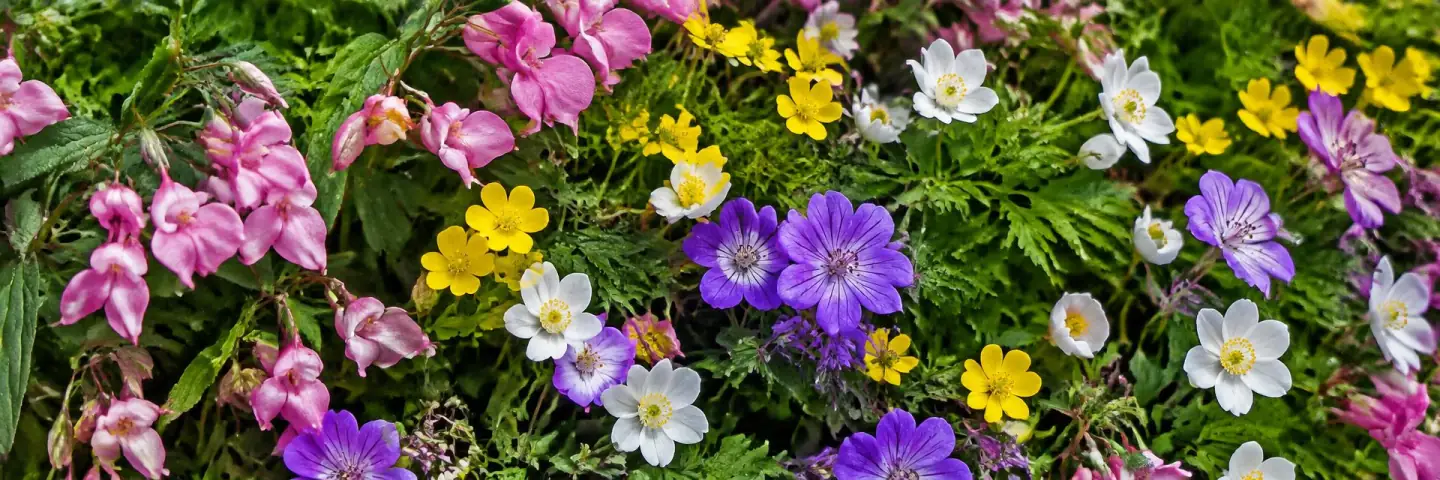
on the trail
Valley of Flowers Trek Guide
Trek at a glance
| Valley meadows | About 3,200 to 3,600 m |
| Hemkund Sahib | About 4,150 to 4,200 m by satellite data (published figures run from 4,329 m to 4,632 m) |
| Base | Ghangaria, about 3,050 m |
| Difficulty | Easy to moderate |
| Duration | 6 days from Rishikesh |
| Season | June – October |
Altitude for every stop, in metres and feet, is in the Valley of Flowers altitude guide.
Suggested itinerary
- Day 1: Rishikesh to Joshimath / Govindghat by road.
- Day 2: Govindghat → Pulna by jeep, trek about 9 km to Ghangaria.
- Day 3: Ghangaria → Valley of Flowers and back (~8–10 km).
- Day 4: Ghangaria → Hemkund Sahib and back (~12 km).
- Day 5: Trek down to Govindghat, drive to Joshimath.
- Day 6: Drive back to Rishikesh.
Doing the valley before Hemkund Sahib gives your body a day at altitude first. If the monsoon closes the road, a spare day at the end saves the plan. The how to reach guide covers each leg of the journey in detail.
The trail, stage by stage
| Stage | Distance | How |
|---|---|---|
| Govindghat – Pulna | 5 km | Shared jeep |
| Pulna – Bhyundar | 5.5 km | On foot |
| Bhyundar – Ghangaria | 3.8 km | On foot |
| Ghangaria – park entry | 0.8 km | On foot |
| Park entry – valley meadows | 4 km | On foot |
| Ghangaria – Hemkund Sahib | 5.8 km | On foot, steep |
Ghangaria is the fork: the valley goes left, Hemkund Sahib right. Most day trekkers turn back at the meadows, though the path carries on up the valley. You can trace every stage on the interactive trek map.
Best time to visit
The last week of July to about 15 August is peak bloom. June offers snow patches and early flowers, with the fewest people; September brings clear views and autumn tones but far fewer flowers. Expect monsoon rain in July–August, so carry good rain gear. The month-by-month guide to the best time to visit shows what is in flower each month.
Permits & fees
A permit is mandatory. Apply on the official portal before you travel, or buy one at the Forest Department counter near Ghangaria, about 1 km from the village. Entry is from 7 am to 2 pm and you must leave the park by 5 pm. Carry an original photo ID. Reported 2026 fees are ₹200 for Indians and ₹800 for foreigners, but sources disagree on fees and on whether a permit lasts one day or three, so confirm when you pay. The full permit guide explains how to apply and where the sources differ.
What it costs
A shoestring DIY trip from Rishikesh costs about ₹6,500 to ₹10,000 per person for five days, and a comfortable one with a mule and rooms for two about ₹11,000 to ₹17,500. Helicopter seats add roughly ₹3,000 to ₹6,500 each way. See the trek cost breakdown for line-by-line prices and what packages include.
Fitness and altitude
The valley walk is gentle by Himalayan standards, but Ghangaria sits at about 3,050 m, where each breath carries about 69% of the oxygen at sea level, and Hemkund Sahib is higher still. Build walking fitness beforehand, drink water, climb slowly and keep the Hemkund climb for after you have spent a night or two at Ghangaria. Camping and overnight stays inside the park are not allowed.
Packing list
- Waterproof trekking shoes, rain jacket and poncho, pack cover
- Warm fleece, thermal layer, quick-dry trousers
- Trekking pole, sun cap, sunscreen, sunglasses
- Water bottle, energy snacks, basic first-aid kit
- Original photo ID, cash (limited ATMs), power bank
What you will see
Flowers change month by month, from early blooms in June to the late gentians and asters of September. Browse the flower field guide for bloom months and altitude, read about the Himalayan blue poppy and Brahma Kamal, or preview the valley in the photo gallery. For the story behind the place, see the history of the Valley of Flowers. Picking or uprooting plants inside the park is prohibited.
Frequently asked questions
When is the Valley of Flowers open?
The park is usually open from 1 June to 31 October. The flowers peak from the last week of July to about 15 August.
How difficult is the trek?
It is an easy-to-moderate trek. Most fit beginners can do it with some preparation. The steepest day is the climb to Hemkund Sahib, not the walk into the valley.
Do I need a permit?
Yes. Apply on the official portal before you travel, or buy one at the Forest Department counter near Ghangaria. Carry an original photo ID.
How much does the trek cost?
A shoestring DIY trip from Rishikesh costs about ₹6,500 to ₹10,000 per person for five days. A comfortable DIY trip with a mule and rooms for two costs about ₹11,000 to ₹17,500.
How many days do I need?
Six days from Rishikesh: two days of travel each way, a day in the valley, and a separate day for Hemkund Sahib. Add a spare day for landslides and weather.
Can I stay inside the valley?
No. Overnight stays and camping are not allowed. Visitors stay at Ghangaria and must be out of the park by 5 pm.
Can I combine it with Hemkund Sahib?
Yes. Hemkund Sahib is a steep 5.8 km climb from Ghangaria and is usually done on a separate day, after the valley.
Is altitude sickness a risk?
Yes, mostly on the Hemkund day. Ghangaria has about 69% of sea-level oxygen and Hemkund about 60%. Visit the valley first, climb slowly and drink water.
What flowers will I see?
It depends on the month. July and August bring the widest variety; see the flower guide for each species' bloom season and altitude.